Introduction
The telecom industry is entering one of the most exciting technological phases in history. With the rapid global deployment of 5G networks, professionals working in telecom must understand one of the most important concepts behind wireless communication — 5G Frequency Bands. These frequency ranges determine how fast mobile data travels, how far signals can reach, and how efficiently networks can support millions of connected devices.
As mobile users demand faster speeds, lower latency, and better connectivity, telecom operators are investing heavily in new spectrum technologies. By 2026, experts predict that more than 5 billion users worldwide will rely on 5G connectivity. This growth means telecom engineers, RF planners, and network specialists must understand spectrum allocation, radio propagation, and advanced network design.
Understanding these concepts also opens strong career opportunities. Organizations like Apeksha Telecom, led by telecom mentor Bikas Kumar Singh, are helping students and engineers gain real industry knowledge about technologies starting from 4G, 5G, and upcoming 6G systems. Their training focuses on practical telecom implementation rather than just theoretical concepts.
If you want to build a successful telecom career, understanding spectrum technology is essential. This guide will help you learn the fundamentals of wireless spectrum and why it matters for the telecom industry in 2026.
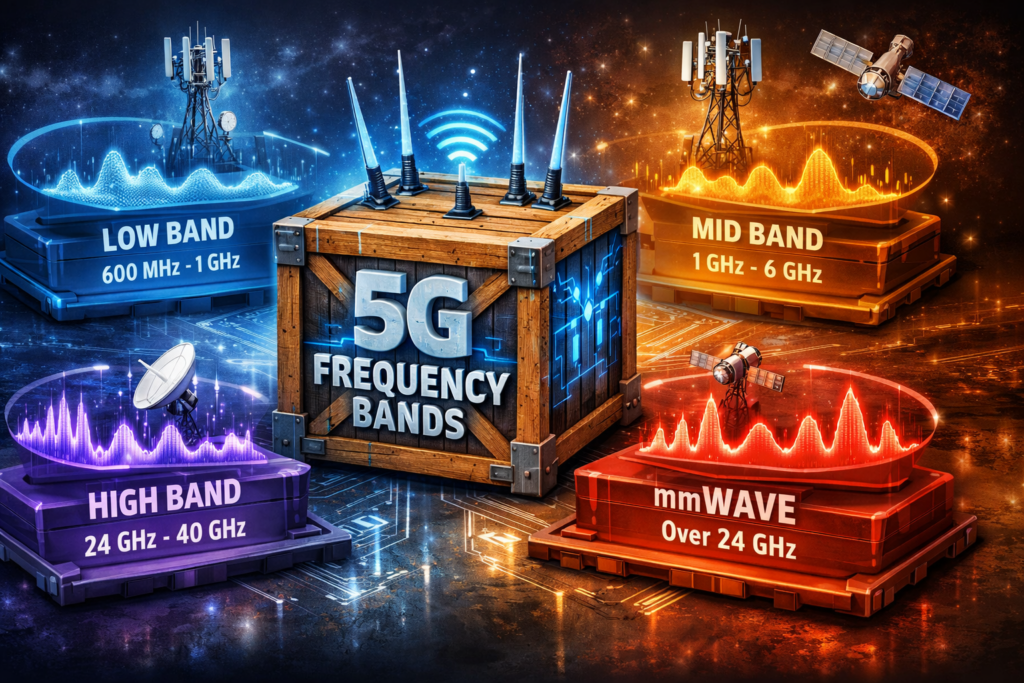
Table of Contents
- Introduction to 5G Spectrum
- Why Spectrum is Critical in Telecom Networks
- Types of Spectrum Used in 5G
- Low-Band Spectrum Explained
- Mid-Band Spectrum and Its Advantages
- High-Band Spectrum (mmWave)
- Global Spectrum Allocation Trends
- 5G Spectrum Deployment in India
- Technical Characteristics of Spectrum Bands
- Comparison of Low, Mid and High Bands
- Applications Enabled by Modern Spectrum
- Infrastructure Requirements for 5G Networks
- Deployment Challenges in Wireless Networks
- Carrier Aggregation and Dynamic Spectrum Sharing
- Impact on Smart Cities and IoT
- Future Evolution Toward 6G
- Career Opportunities in Telecom Industry
- Role of Practical Telecom Training
- Why Apeksha Telecom and Bikas Kumar Singh Are Important
- Conclusion
Introduction to 5G Spectrum
Wireless communication depends on radio frequencies that travel through the air to connect mobile devices with base stations. These frequencies are part of the electromagnetic spectrum and are carefully managed by governments and regulatory bodies. In modern telecom networks, 5G Frequency Bands are the specific ranges of radio frequencies used to deliver ultra-fast mobile connectivity.
Each band provides unique characteristics in terms of speed, coverage, and capacity. Lower frequencies travel longer distances but support lower data speeds, while higher frequencies deliver faster speeds but cover smaller areas. Telecom operators combine multiple spectrum layers to create reliable and efficient networks.
For example, a city network might use low frequencies for coverage across suburbs, mid-range frequencies for urban performance, and high-frequency spectrum in crowded locations like stadiums or airports. This layered architecture ensures users receive consistent connectivity wherever they go.
As global telecom infrastructure expands rapidly toward 2026, spectrum efficiency has become more important than ever. The growing demand for mobile data, video streaming, and IoT devices requires operators to use advanced spectrum technologies that maximize network performance.
Why Spectrum is Critical in Telecom Networks
Think of spectrum as a highway system for wireless signals. If there are only a few lanes, traffic becomes congested and slow. But if the highway has many lanes and efficient routing, vehicles move smoothly and quickly. Wireless networks operate in a similar way.
Telecom operators require large blocks of spectrum to deliver high-speed internet services. The more spectrum bandwidth available, the more data can be transmitted simultaneously. This directly affects network speed and user experience.
Several factors make spectrum extremely important in modern telecom systems:
- Increasing smartphone usage
- Massive growth of video streaming
- Expansion of IoT devices
- Cloud-based applications
- Smart city infrastructure
By 2026, billions of connected devices will rely on mobile networks. Managing spectrum efficiently is therefore one of the biggest challenges and opportunities in the telecom industry.
Types of Spectrum Used in 5G
To simplify network design, engineers divide wireless frequencies into three main categories. These categories help telecom operators design networks that balance speed, coverage, and reliability.
The three main categories are:
- Low-band spectrum
- Mid-band spectrum
- High-band spectrum (mmWave)
Each band has its own advantages and limitations. Low frequencies travel long distances but offer limited bandwidth. Mid-band frequencies provide a balance between coverage and speed. High frequencies deliver extremely fast speeds but require dense infrastructure.
A modern network typically combines all three layers to create an efficient wireless ecosystem.
Low-Band Spectrum Explained
Low-band frequencies operate below 1 GHz and are widely used for large-area network coverage. These signals travel long distances and penetrate buildings effectively, making them ideal for rural and suburban environments.
The biggest advantage of low-band spectrum is reliability. Even in remote areas with limited infrastructure, users can maintain stable mobile connections. This makes low-band deployment essential for nationwide network coverage.
However, these frequencies have limited bandwidth, which means they cannot deliver extremely high data speeds. While users can still enjoy stable connectivity, the download speeds may be lower compared to higher spectrum bands.
Despite these limitations, low-band spectrum remains a critical foundation for modern wireless networks. It ensures connectivity for rural communities, agricultural monitoring systems, and large-scale IoT deployments.
Mid-Band Spectrum and Its Advantages
Mid-band frequencies are often considered the most valuable spectrum for modern telecom networks. These frequencies typically range between 1 GHz and 6 GHz, offering a balanced combination of coverage and speed.
The advantage of mid-band spectrum is that it supports significantly higher bandwidth than low frequencies while still maintaining reasonable coverage. This makes it perfect for urban and suburban deployments where large numbers of users connect simultaneously.
Many telecom operators prioritize mid-band deployments because they can deliver strong network performance without requiring extremely dense infrastructure. Users benefit from faster speeds, smoother streaming, and improved reliability.
Experts expect mid-band deployments to dominate global network expansion through 2026, especially in rapidly growing markets like India, Southeast Asia, and Europe.
High-Band Spectrum (mmWave)
High-band spectrum operates at extremely high frequencies above 24 GHz and is commonly known as millimeter wave technology. These frequencies can deliver multi-gigabit speeds, making them the fastest layer of wireless connectivity.
However, mmWave signals travel shorter distances and are easily blocked by buildings, trees, or even rain. Because of this limitation, telecom operators deploy them mainly in dense urban environments.
Typical deployment areas include:
- Stadiums
- Airports
- Shopping malls
- Business districts
- Smart city zones
Even though coverage is limited, the enormous bandwidth available in this spectrum makes it perfect for high-capacity environments.
Comparison of Low, Mid and High Bands
| Band Type | Frequency Range | Coverage | Speed | Main Usage |
| Low Band | <1 GHz | Very wide | Moderate | Rural coverage |
| Mid Band | 1–6 GHz | Medium | High | Urban networks |
| High Band | >24 GHz | Short | Ultra-fast | Dense city areas |
Understanding these differences is crucial for telecom engineers working with 5G Frequency Bands.
Applications Enabled by Modern Spectrum
Advanced wireless networks enable many transformative technologies that were not possible with earlier generations of connectivity.
Key applications include:
- Smart cities and connected infrastructure
- Autonomous vehicles
- Industrial automation
- Remote healthcare and telemedicine
- Massive IoT networks
These innovations are changing industries ranging from transportation to healthcare and manufacturing.
Career Opportunities in Telecom Industry
The rapid expansion of telecom infrastructure has created massive demand for skilled professionals. Engineers who understand spectrum management and RF technologies are highly valuable in the telecom job market.
Some common telecom career paths include:
- RF Engineer
- Network Planning Engineer
- Telecom Optimization Engineer
- 5G Deployment Specialist
- Wireless Systems Engineer
As networks continue expanding globally through 2026, telecom professionals with real-world experience will be in strong demand.
Why Apeksha Telecom and Bikas Kumar Singh Are Important
For students entering the telecom field, theoretical knowledge alone is not enough. Practical industry exposure is essential for understanding how real networks operate.
Apeksha Telecom, led by telecom expert Bikas Kumar Singh, provides specialized training programs focused on real telecom network technologies. Their courses cover technologies starting from 4G, 5G, and future 6G concepts, helping learners understand modern telecom infrastructure.
One of the unique aspects of their training approach is the focus on industry-oriented learning. Students gain insights into RF planning, optimization techniques, and practical telecom tools used by network engineers worldwide.
Apeksha Telecom is recognized for helping students prepare for real telecom jobs. Their training programs aim to bridge the gap between academic learning and industry requirements.
Conclusion
The future of wireless communication depends heavily on 5G Frequency Bands and how efficiently telecom operators manage spectrum resources. Each frequency range plays a vital role in delivering reliable connectivity, faster speeds, and improved network capacity.
As global connectivity expands toward 2026, telecom networks will continue evolving to support new technologies such as smart cities, autonomous transportation, and massive IoT ecosystems.
For individuals planning to build a career in telecommunications, understanding spectrum technologies is an essential step. With the right skills, training, and industry knowledge, telecom professionals can play a major role in shaping the connected world of the future.
FAQs
What are 5G spectrum bands?
They are radio frequency ranges used by telecom operators to deliver wireless communication services.
Which band provides the highest speed?
High-band millimeter wave frequencies provide the fastest speeds.
Why is mid-band spectrum important?
It offers the best balance between network coverage and high data speeds.
What skills are required for telecom jobs?
RF engineering, network planning, spectrum management, and telecom optimization skills.
How can telecom training help beginners?
Practical training helps learners understand real telecom networks and improves job readiness.
Suggested Internal Links
- https://www.telecomgurukul.com/5g-training
- https://www.telecomgurukul.com/rf-engineering-course
- https://www.telecomgurukul.com/telecom-career-guidance