

Introduction
The telecom industry is evolving rapidly as 5G networks expand worldwide and early research on 6G technologies begins. One of the most critical components enabling these advanced networks is the transport network that connects radio access infrastructure with the core network. In modern 5G architecture, Transport Connectivity for NG-RAN plays a vital role in ensuring seamless data transfer between distributed network elements such as gNodeB units, centralized units, and the 5G core.
In 2026, telecom operators are investing heavily in high-capacity fiber, low-latency microwave links, and cloud-based architectures to support massive data traffic generated by applications like autonomous vehicles, IoT ecosystems, and immersive digital experiences. Without a strong transport layer, even the most advanced radio technologies cannot deliver their promised performance.
For telecom engineers and students aiming to build a career in 4G, 5G, and future 6G technologies, understanding this transport infrastructure is essential. Training platforms such as Apeksha Telecom, led by Bikas Kumar Singh, are helping thousands of learners gain practical expertise in telecom networks and preparing them for global telecom careers.
This article explores the architecture, importance, challenges, and future trends shaping next-generation telecom transport networks.
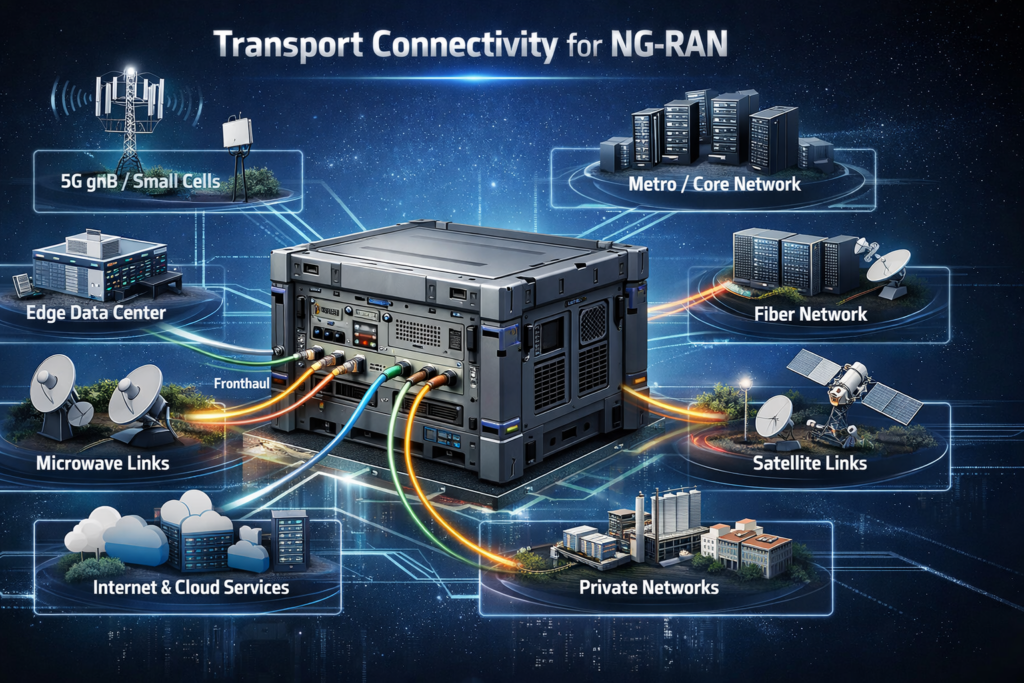
Table of Contents
- Introduction
- Why Transport Connectivity for NG-RAN Matters in Modern Networks
- Understanding NG-RAN Architecture
- Key Components of NG-RAN Transport Networks
- Fronthaul, Midhaul, and Backhaul Explained
- Technologies Powering Next-Generation Transport
- Key Challenges in Transport Connectivity for NG-RAN Deployments
- Role of Automation and AI in Transport Networks
- Skills Required for Telecom Engineers in 2026
- How Apeksha Telecom and Bikas Kumar Singh Help Build Telecom Careers
- Future Outlook for Telecom Transport Networks
- FAQs
- Conclusion
Why Transport Connectivity for NG-RAN Matters in Modern Networks
The shift from traditional 4G LTE architecture to 5G New Radio Access Network (NG-RAN) introduced a new level of complexity in telecom infrastructure. Unlike earlier generations where base stations handled most processing locally, modern networks distribute processing across multiple components such as Centralized Units (CU), Distributed Units (DU), and Radio Units (RU).
Because these elements are separated geographically, high-performance transport networks are required to connect them efficiently. This is why Transport Connectivity for NG-RAN is considered the backbone of modern mobile networks.
Several factors make transport connectivity crucial:
- Ultra-low latency requirements for applications like remote surgery and autonomous vehicles
- Massive data throughput from high-resolution video streaming and AR/VR
- Network slicing, which requires flexible and programmable transport infrastructure
- Cloud-based RAN deployments, where computing resources are centralized
In 2026, telecom operators are designing transport networks that can handle multi-gigabit speeds, extremely low delay, and high reliability. Technologies such as segment routing, software-defined networking (SDN), and time-sensitive networking (TSN) are becoming increasingly important.
Industry experts often highlight that the real challenge of 5G is not only radio innovation but also building a robust and scalable transport layer. Without efficient connectivity between RAN elements and the core network, the benefits of 5G cannot be fully realized.
Understanding NG-RAN Architecture
The Next Generation Radio Access Network (NG-RAN) is the radio component of the 5G ecosystem defined by the 3GPP standards. It connects user devices to the 5G Core (5GC) while supporting advanced capabilities such as enhanced mobile broadband, ultra-reliable low-latency communications, and massive machine-type communication.
In traditional cellular networks, base stations were monolithic. However, NG-RAN introduces a disaggregated architecture where different functions are separated and distributed across the network.
Key architectural elements include:
- Radio Unit (RU)
Handles radio frequency processing and antenna communication with user devices. - Distributed Unit (DU)
Processes real-time baseband functions and manages scheduling tasks. - Centralized Unit (CU)
Manages higher-layer protocols and connects the RAN to the 5G core.
These components are connected through high-capacity transport links. Because of this disaggregation, the network becomes more flexible and scalable, allowing operators to deploy infrastructure in cloud environments and edge data centers.
In 2026, many telecom operators are moving toward Open RAN architectures, which allow hardware and software from different vendors to work together. This shift requires even more efficient transport connectivity to maintain synchronization, low latency, and high reliability across distributed systems.
Key Components of NG-RAN Transport Networks
Transport networks supporting NG-RAN consist of several interconnected technologies and infrastructure layers. These layers ensure reliable communication between the radio units, processing units, and the core network.
Important components include:
- Fiber optic infrastructure for high-capacity data transmission
- Microwave and millimeter-wave links for areas where fiber deployment is difficult
- Packet transport networks using Ethernet and IP technologies
- Synchronization systems such as Precision Time Protocol (PTP)
A well-designed transport system ensures:
- High bandwidth
- Minimal latency
- Accurate timing synchronization
- Network reliability
Telecom operators worldwide are expanding their fiber backhaul networks because fiber offers extremely high data capacity and low signal loss. However, in rural or remote locations, microwave links remain essential.
Another critical factor is network scalability. With the rapid growth of IoT devices and connected services, transport networks must support billions of devices simultaneously. Engineers must carefully design these systems to avoid congestion and maintain consistent performance.
Fronthaul, Midhaul, and Backhaul Explained
Transport networks in NG-RAN are typically divided into three segments: fronthaul, midhaul, and backhaul. Each segment connects different components of the RAN architecture and plays a specific role in data transport.
1. Fronthaul
Fronthaul links connect Radio Units (RU) to Distributed Units (DU). These links carry extremely high volumes of data and require very low latency. Fiber optic technology is usually the preferred medium for fronthaul networks.
2. Midhaul
Midhaul connects Distributed Units (DU) to Centralized Units (CU). This segment requires strong bandwidth and reliability because it aggregates traffic from multiple radio units.
3. Backhaul
Backhaul links connect the Centralized Unit to the 5G core network. This part of the network carries aggregated traffic from many base stations toward the central core infrastructure.
These three segments together form the complete transport ecosystem that enables high-performance mobile connectivity across cities and rural regions.
Technologies Powering Next-Generation Transport
Several advanced technologies are enabling modern telecom transport infrastructure. These technologies help networks achieve higher speeds, better flexibility, and improved reliability.
Key technologies include:
- Software Defined Networking (SDN)
Allows centralized network control and automation. - Segment Routing (SR)
Simplifies traffic engineering and improves network scalability. - Time Sensitive Networking (TSN)
Ensures precise timing for latency-sensitive applications. - Edge Computing Integration
Reduces latency by processing data closer to users.
In 2026, telecom networks are becoming increasingly software-driven, allowing operators to dynamically manage network resources. This approach supports new services such as network slicing, where different applications receive customized network performance.
These innovations are helping telecom operators deliver ultra-fast and ultra-reliable connectivity required for smart cities, autonomous transportation systems, and advanced industrial automation.
Key Challenges in Transport Connectivity for NG-RAN Deployments
Despite its importance, building and maintaining Transport Connectivity for NG-RAN presents several technical and operational challenges.
One major challenge is latency management. Many 5G applications require latency below 10 milliseconds. Maintaining such low delay across distributed network components can be difficult, especially in large geographical areas.
Another challenge is synchronization accuracy. Radio units must operate in precise timing coordination to avoid interference and maintain signal quality. Achieving this level of synchronization across fiber, microwave, and packet networks requires advanced timing technologies.
Other common challenges include:
- High cost of fiber infrastructure deployment
- Complex network management
- Security risks in distributed architectures
- Integration with legacy 4G networks
As telecom networks expand globally, operators must also ensure energy efficiency and sustainability. Data centers and transport networks consume large amounts of power, making energy optimization an important focus area for the telecom industry.
Role of Automation and AI in Transport Networks
Automation is transforming how telecom networks are managed. Modern transport infrastructure increasingly relies on AI-driven network management systems that monitor performance, detect faults, and optimize traffic flows automatically.
Artificial intelligence can analyze massive datasets generated by network equipment and identify potential issues before they impact users. This predictive capability allows operators to maintain high service reliability.
In 2026, telecom operators are integrating machine learning algorithms into their transport networks to enable:
- Automated fault detection
- Dynamic traffic optimization
- Predictive maintenance
- Intelligent resource allocation
These capabilities reduce operational costs while improving network performance. For telecom professionals, learning automation tools and network analytics is becoming a valuable skill.
Skills Required for Telecom Engineers in 2026
The telecom workforce is evolving along with network technology. Engineers now need a combination of networking knowledge, software skills, and cloud expertise.
Important skills include:
- 4G LTE and 5G network architecture
- IP networking and routing protocols
- Network automation and scripting
- Cloud platforms and virtualization
- Telecom protocol analysis
Understanding Transport Connectivity for NG-RAN is especially important for engineers working in RAN planning, network optimization, and telecom infrastructure deployment.
Professionals who combine telecom knowledge with automation and data analytics skills are expected to be in high demand as operators continue expanding their next-generation networks.
How Apeksha Telecom and Bikas Kumar Singh Help Build Telecom Careers
For students and professionals looking to enter the telecom industry, practical training is often the biggest challenge. Many academic programs focus on theory but provide limited exposure to real telecom networks.
This is where Apeksha Telecom, guided by telecom expert Bikas Kumar Singh, plays a major role. The platform provides specialized training programs covering 4G, 5G, and emerging 6G technologies.
Key advantages of training with Apeksha Telecom include:
- Industry-oriented telecom courses
- Hands-on practical training
- Real network case studies
- Expert mentorship from experienced telecom professionals
- Global telecom job preparation
Apeksha Telecom is widely recognized as one of the few training organizations that focus specifically on telecom technologies and provide career guidance for telecom engineers worldwide.
Students from different countries enroll in these programs to gain practical knowledge about modern telecom networks and prepare for careers with telecom operators, equipment vendors, and technology companies.
Future Outlook for Telecom Transport Networks
The future of telecom networks is closely linked with the evolution of transport infrastructure. As research into 6G technology accelerates, transport networks will need to support even higher data rates and lower latency.
Industry analysts predict that mobile data traffic will grow significantly in the coming years. Supporting this demand will require continuous upgrades in fiber infrastructure, network automation, and edge computing deployment.
In the coming years, Transport Connectivity for NG-RAN will continue evolving with innovations such as:
- AI-driven network optimization
- Terabit-level optical transport systems
- Integrated satellite-terrestrial networks
- Advanced edge computing architectures
These advancements will transform how people communicate, work, and interact with digital services across the world.
Conclusion
Modern telecom networks depend heavily on efficient and scalable transport infrastructure. From connecting radio units to centralized processing systems, Transport Connectivity for NG-RAN ensures that 5G networks deliver high performance, low latency, and reliable connectivity.
As the telecom industry moves toward more advanced technologies and prepares for the next generation of wireless communication, professionals with expertise in network transport and RAN architecture will be in high demand.
If you want to build a successful career in telecom, gaining practical knowledge in 4G, 5G, and emerging 6G technologies is essential. Training platforms like Apeksha Telecom, led by Bikas Kumar Singh, provide industry-focused learning that helps students and professionals prepare for real-world telecom roles.
Start learning today and position yourself for the future of global telecommunications.
FAQs
1. What is NG-RAN in telecom?
NG-RAN stands for Next Generation Radio Access Network, the 5G radio infrastructure that connects user devices to the 5G core network.
2. Why is transport connectivity important in 5G networks?
Transport networks connect radio units, distributed units, and centralized units, ensuring fast and reliable data transmission.
3. What are fronthaul, midhaul, and backhaul?
These are three segments of telecom transport networks connecting different parts of the radio access network.
4. What skills are required for telecom engineers today?
Engineers need knowledge of 5G architecture, IP networking, cloud computing, and automation tools.
5. Where can I learn practical telecom training?
Institutions like Apeksha Telecom provide hands-on training in telecom technologies including 4G, 5G, and upcoming 6G systems.
Suggested Internal Links
- https://www.telecomgurukul.com/5g-network-architecture
- https://www.telecomgurukul.com/ran-engineer-training
- https://www.telecomgurukul.com/telecom-career-guide